Best Glue for RC Tires — A Full Comparison and Guide
Finding the best glue for RC tires is one of those questions that looks simple until a fresh set peels off the rim halfway through a run. The short answer is that thin CA glue formulated for tire gluing is the standard choice for most cars and trucks, but the full answer depends on whether the tires are headed for a race weekend or an afternoon of casual bashing, how the rim was prepped beforehand, and whether the technique used actually gets glue into the seam instead of just on top of it. This guide works through the real comparison between thin CA, thick CA, contact cement and flexible adhesives, the step-by-step technique for getting a clean bond every time, the mistakes that cause most tire-glue failures, and buying picks by use case.
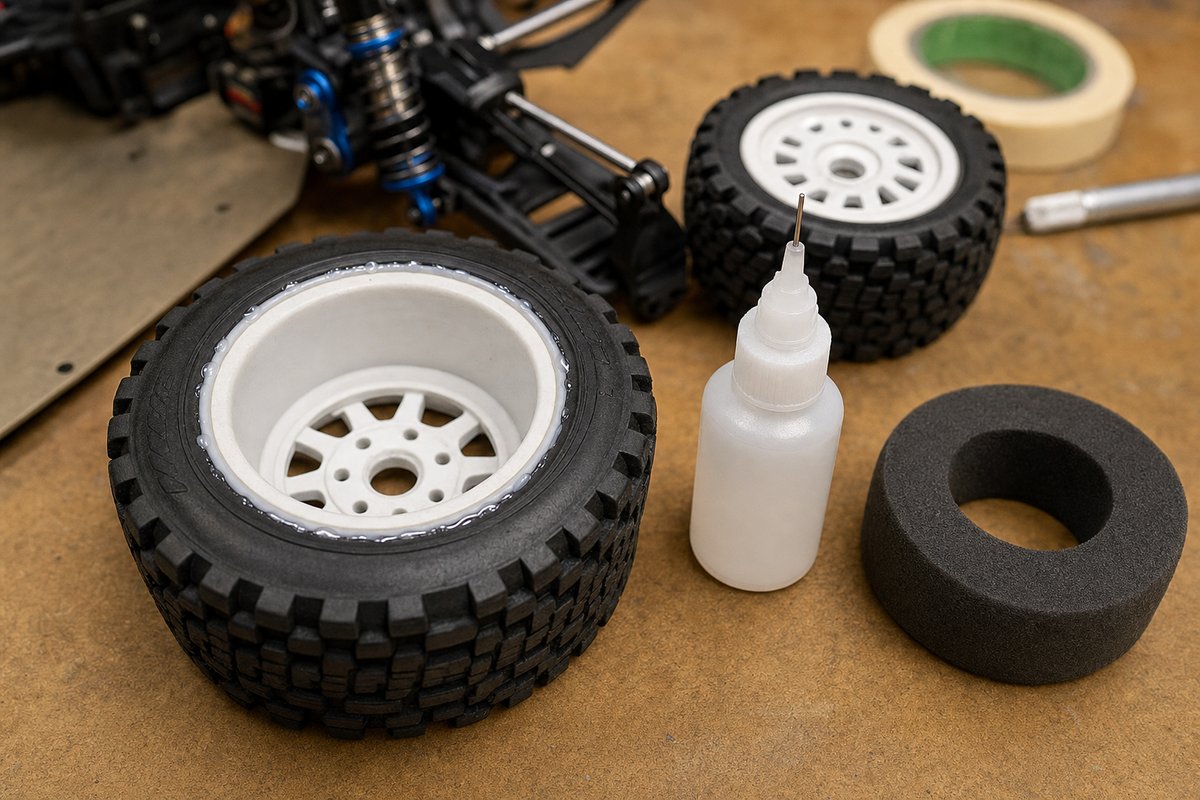
Thin CA Glue vs. Contact Cement for Gluing RC Tires
The core comparison anyone shopping for the best rc tire glue eventually runs into is thin CA against contact cement, and the two behave differently enough that picking between them should depend on how the tires actually get used. Thin CA is a cyanoacrylate formula thinned to flow easily by capillary action, which lets it wick into the narrow seam between a tire's bead and the wheel lip and cure through moisture in the surrounding air within seconds. That fast cure is exactly what makes it the default pick for racing: tires can be glued the night before an event and be fully race-ready well before staging.
Contact cement takes a different approach entirely. Rather than curing through a chemical reaction the way CA does, contact cement is applied to both surfaces, given open time to become tacky, then pressed together to form a bond on contact. That process takes far longer than a CA application, often requiring 10 to 30 minutes of open time before the tire even gets seated, plus additional cure time after. What contact cement gives up in speed it makes up in flexibility: the cured bond flexes with the tire rather than staying rigid, which some racers and a lot of bashers prefer for its resistance to cracking over repeated hard impacts.
Neither option is universally the best rc tire glue for every situation. Thin CA wins on speed and is the more proven choice for a tight racing schedule, while contact cement suits a build where cure time is not a constraint and a slightly more forgiving, flexible bond matters more than getting back on track in the same afternoon.
Why Tire-Specific CA Formulas Differ From Standard Hobby CA
Not every CA glue on a hobby shop shelf is actually suited to gluing tires, and the difference matters more than the label suggests. General-purpose hobby CA is formulated for bonding plastic, wood and other rigid materials, and some of those formulas contain solvents or catalysts that react poorly with rubber compound over time, gradually drying it out or making it brittle at the bond line. A tire that looks glued solid on day one can start separating weeks later if the CA used was never meant to sit against rubber long-term.
Tire-specific CA formulas are thinned and chemically tuned specifically to avoid that reaction, staying flexible enough at the bond line to move with the tire under cornering load instead of creating a hard, brittle ridge that eventually cracks. They also tend to run thinner than general CA, which matters for wicking into a tight bead seam rather than pooling on the surface. The price difference between a bottle labeled for general use and one labeled specifically for tires is usually small, and given how much a failed glue job costs in a ruined tire or a DNF, it is not the place to save a couple of dollars.
Standard hobby CA is not off the table entirely; a lot of casual bashers run it without issue for years. But anyone gluing tires for regular racing use, or anyone who has had a tire come loose mid-run before, gets a real, measurable improvement in reliability from switching to a tire-specific thin CA formula over a generic bottle pulled from a general parts bin.
How to Glue RC Car Tires: Foam Insert, Bead Application and Cure Time
Learning how to glue RC car tires correctly comes down to sequence and patience more than any special tool. Skipping steps or rushing the cure is the most common reason a technically correct glue choice still fails on the track.
Seat the foam insert first. Before any glue comes out, the foam insert needs to be fully and evenly seated inside the tire, with no folds or gaps around the circumference. A foam insert that sits unevenly will push the tire's bead away from the rim in spots once it's mounted, leaving a gap that glue cannot bridge no matter how much gets applied.
Clean the rim before mounting. Wipe the wheel lip with isopropyl alcohol and let it dry fully. Mold-release residue, dust, or leftover glue from a previous tire is one of the most common reasons a fresh bond fails within the first few runs, and it is invisible until the glue simply refuses to hold.
Mount the tire and apply a thin, even bead. With the tire seated on the clean rim, run a thin, continuous bead of glue around the full seam between the tire's bead and the wheel lip. Let capillary action pull the glue into the joint rather than pressing the applicator tip hard against the rubber; a thin bead wicks in evenly, while a heavy bead tends to sit on the surface and cure into a weaker, uneven ridge.
Rotate and check the full circumference. Work around the wheel in sections, rotating it so every part of the seam gets even coverage, and wipe away any excess that squeezes out onto the tread before it sets. A gap left ungapped on one side of the wheel is exactly where a tire will start to separate first under cornering load.
Respect the cure time before running it hard. Thin CA sets at the surface within seconds, but the bond does not reach its full rated strength that quickly. Giving a freshly glued set several hours, ideally overnight, before subjecting it to hard cornering or jumps gives the glue time to fully cure through rather than just skin over.
Common RC Tire Gluing Mistakes to Avoid
Most tire glue complaints trace back to one of a handful of repeatable mistakes rather than a bad batch of glue, and most of them disappear once the correct sequence for how to glue RC car tires gets followed consistently. Using too much glue is the single most common one: a heavy bead looks thorough but actually cures slower all the way through and often ends up weaker than a properly thin application, since the outer layer skins over before the glue underneath has fully set.
Picking the wrong viscosity for the job is the second common mistake. Reaching for a thick, gap-filling CA meant for structural chassis repairs and using it on a tight tire seam produces a slow-curing, brittle joint instead of the fast, flexible bond a tire-specific thin CA delivers. The reverse mistake, using a very thin CA meant for tires to fill an actual structural gap elsewhere on the vehicle, causes its own problems, since a thin formula has little gap-filling strength.
Gluing over a dirty or oily rim rounds out the list, and it is the mistake most likely to produce a bond that looks fine on day one and fails within the first few runs. Mold-release compound from the manufacturing process, dust picked up in storage, and residue from a previous tire all interfere with a clean bond, and none of them are obvious just by looking at the rim. A quick wipe with isopropyl alcohol before every gluing session is cheap insurance against a repeat failure.
Tire Glue Alternatives and When They're Acceptable
Dedicated thin CA is not the only workable option, and knowing when an alternative is acceptable saves a trip to the hobby shop when the cabinet runs dry. Contact cement, covered above, is a legitimate primary choice rather than just a fallback, particularly for bashing tires that see less frequent, less aggressive use than a dedicated racing set.
Flexible, rubber-specific adhesives in the Shoe-Goo family are a reasonable alternative for an occasional repair or a bashing tire that is not headed to a race. Cure time runs considerably longer than either CA or contact cement, often several hours to a full day, and the cured bond is noticeably softer, which means it can shift slightly under hard cornering load in a way a proper tire glue would not. That tradeoff is acceptable for a truck that mostly sees backyard use, but it is not a substitute for tire-specific CA on anything driven hard or raced regularly.
What does not belong on the list of acceptable alternatives is generic all-purpose hobby CA left over from a plastic repair, hot glue, or super glue pulled from a household drawer. Hot glue in particular bonds poorly to the low-surface-energy rubber compound used in most RC tires and softens under the heat a tire sees during hard driving, making it one of the least reliable choices available even as a temporary fix.
Best Glue for RC Tires by Use Case: Racing vs. Bashing
There is no single best glue for RC tires that fits every driving style, and the right pick depends heavily on whether the tires are built for competition or for casual backyard use. For racing, a tire-specific thin CA remains the best glue for RC tires by a wide margin: it cures fast enough to glue a full set the night before an event, and its track record for holding up to repeated hard cornering is well established across most classes of competitive RC racing.
For bashing, the calculation shifts. A basher who is not racing against a clock or a lap counter can afford contact cement's longer cure time in exchange for a more flexible, impact-tolerant bond, or a flexible rubber adhesive for the occasional quick repair. Neither alternative matches thin CA's raw speed, but speed matters less when the truck is heading out for a casual run rather than staging for a heat race.
Budget also plays a role in the choice. Thin, tire-specific CA typically costs more per bottle than a bulk bottle of contact cement, but a little goes a long way at typical bead-seam application rates, so the real cost gap across a season of regluing tires is smaller than the shelf price suggests. Anyone regularly swapping between multiple tire compounds for different track conditions is usually better served standardizing on one reliable tire-specific CA rather than shopping for the cheapest bottle each time.
RC Tire Glue Comparison: Cure Time, Bond Durability and Rubber Safety
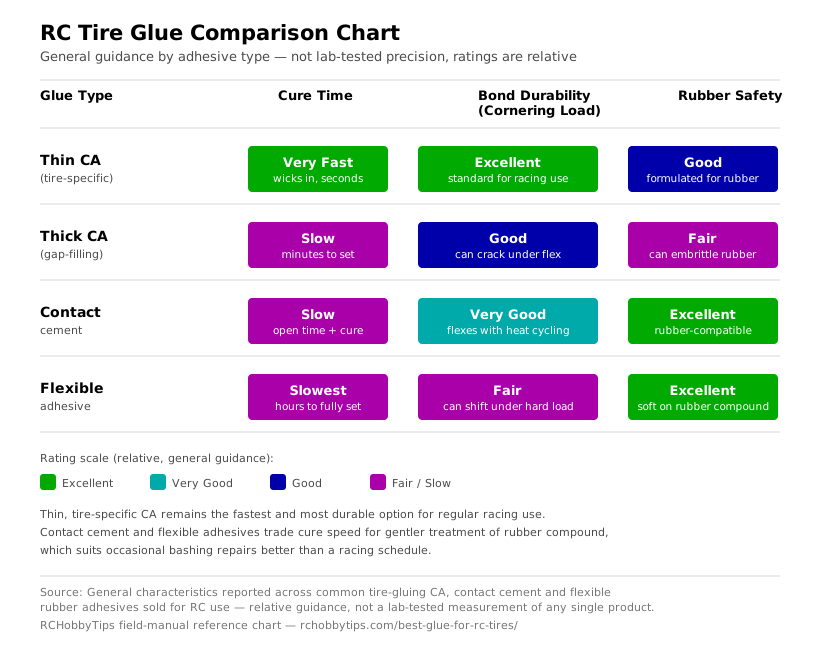
The chart below lays out a direct comparison across the four adhesive types covered in this guide, rated on cure time, bond durability under cornering load, and rubber safety. These are relative, qualitative ratings meant as general guidance rather than a lab-tested measurement of any specific product, since actual performance varies by brand and formula.
Embed this chart
Thin CA leads on both cure time and bond durability under cornering load, which is exactly why it dominates competitive use despite costing more per bottle than the alternatives. Contact cement is the standout on rubber safety and durability once cured, at the cost of a much longer wait before the tires are usable. Thick CA and flexible adhesives each fill a narrower niche: thick CA for gap-filling jobs it was actually designed for rather than tire seams, and flexible adhesive for the occasional low-stakes repair where speed matters least.
Buying Guide: How to Pick the Best RC Tire Glue for Your Setup
A practical buying guide for tire glue starts with an honest look at how the vehicle actually gets driven rather than defaulting to whatever bottle is cheapest on the shelf. For anyone racing on a schedule, a tire-specific thin CA formula from a reputable hobby brand is worth buying in bulk, since a season of regular racing goes through more glue than most first-time buyers expect and running out mid-season means gluing tires with whatever happens to be available.
For casual bashing, a smaller bottle of tire-specific thin CA still covers most needs, with a tube of contact cement kept on hand as a backup for a tire that needs a more flexible bond after an unusually hard impact. A basher who never races competitively can reasonably standardize on contact cement alone if the longer cure time is not an issue, since its durability and rubber-safety profile hold up well over a casual driving schedule.
Whichever glue gets chosen, buying a dedicated CA accelerator alongside a thin CA formula is worth considering for anyone who cannot spare the overnight cure time a properly cured bond benefits from; an accelerator speeds the surface cure noticeably, though it does not replace giving the joint real time before subjecting it to hard cornering load. The Tools & Maintenance section covers the rest of the adhesive and hardware picks that round out a basic maintenance kit, including Gorilla Glue vs. epoxy for structural chassis repairs elsewhere on the vehicle, fixing a stripped screw hole in plastic, and the RC tool kit picks worth keeping on the bench alongside a bottle of tire glue.
Frequently Asked Questions
What is the best glue for RC tires?
Thin CA glue formulated specifically for tire gluing is the best glue for RC tires for most owners: it wicks into the seam between the tire and the wheel or foam insert, cures in seconds, and holds up to hard cornering loads without eating into the rubber compound the way a generic solvent-based adhesive can.
Is thin CA or thick CA better for gluing RC tires?
Thin CA is the better choice for tire gluing specifically, since it wicks into the tight seam by capillary action and cures almost instantly. Thick, gap-filling CA is meant for larger gaps and structural joints elsewhere on the vehicle; used on a tire bead it cures slower and sits as a thicker layer that is more prone to cracking once the tire flexes under load.
Can contact cement be used to glue RC tires?
Yes. Contact cement is a legitimate alternative for gluing RC tires, particularly for bashing tires that see less frequent racing use, since its more flexible cured bond handles heat cycling and repeated flex well and it does not attack rubber compound the way some CA formulas can over time. The tradeoff is a much longer open and cure time than thin CA.
How long does RC tire glue need to cure before driving?
Thin CA formulated for tire gluing typically sets within seconds to a couple of minutes at the bead, but a full cure that reaches its rated bond strength takes longer, and most experienced racers give a freshly glued set at least a few hours, ideally overnight, before running it hard. Contact cement and flexible adhesives need substantially longer, often several hours to a full day.
How do you glue RC car tires step by step?
Seat the foam insert fully into the tire first, mount the tire onto a clean, dry rim, then run a thin, even bead of glue around the full seam between the tire bead and the wheel lip, letting capillary action pull it into the joint rather than flooding it. Rotate the wheel to apply even pressure around the circumference, wipe away any excess immediately, and let it cure fully before running the tire.
Why is my RC tire glue not holding?
The most common causes are gluing over a dirty or oily rim, using too much glue so the joint never fully cures through, or applying a glue with the wrong viscosity for the gap being filled. Cleaning the rim with isopropyl alcohol before gluing and running a thin, even bead rather than a heavy one resolves most repeat failures.
Do I need to clean the rim before gluing an RC tire?
Yes. A rim with mold-release residue, dirt, or old glue left over from a previous tire will not bond reliably even with a good tire glue. A quick wipe with isopropyl alcohol and a clean cloth, followed by drying time before glue goes on, removes the most common reason a fresh glue job fails within the first few runs.
What is a reasonable alternative to dedicated RC tire glue?
Shoe-Goo-style flexible rubber adhesives and some contact cements can hold a tire bead in a pinch, though cure time runs much longer and the softer bond tends to be less durable under hard cornering loads than dedicated thin CA. These alternatives suit an occasional bashing repair better than a build meant for regular racing.
Should racing tires use different glue than bashing tires?
It is worth treating them differently. Racing tires benefit from thin, tire-specific CA for its fast cure and proven durability under repeated hard cornering, while bashing tires that take more casual, occasional use can get by with contact cement or a flexible adhesive that trades some cure speed for a gentler treatment of the rubber compound.
How much glue should be used on an RC tire?
Less than most first-timers expect. A thin, continuous bead around the seam is enough for capillary action to pull the glue into the joint; flooding the seam with excess glue slows the cure, can seep onto the tread, and often leaves a weaker bond than a properly thin application once fully cured.
Can old glue be removed and RC tires reglued?
Yes, though it takes some patience. Old, cracked CA can usually be peeled or scraped off the rim lip with a hobby knife, followed by a light sanding of the mating surface and a clean with isopropyl alcohol before applying fresh glue. Skipping the cleanup step and gluing directly over old residue is a common reason a reglue job fails quickly.
Is RC tire glue safe to use indoors?
Thin CA glue releases fumes as it cures that can irritate eyes and airways in a small, poorly ventilated space, so gluing tires on a workbench with a window open or a fan running is worth doing even for a quick job. Contact cement and flexible adhesives generally carry stronger solvent odors and benefit from the same ventilation.
Does temperature affect how well CA glue cures on RC tires?
Yes. Cold temperatures slow CA's moisture-triggered cure noticeably, sometimes stretching a normal few-second set time into a minute or more, while very dry air has a similar slowing effect regardless of temperature. Gluing tires in a heated, moderately humid space rather than a cold garage in winter gets a more reliable, faster cure without changing anything about the glue itself.
Can accelerator spray be used with RC tire glue?
Yes, CA accelerator sprays designed for hobby use speed the surface cure of thin CA noticeably, which is useful when tires need to be race-ready sooner than an overnight cure allows. Accelerator speeds the visible set but doesn't replace giving the joint real time to reach full bond strength, so it's a convenience for scheduling, not a substitute for patience on a joint that will see hard cornering loads.
Do foam inserts need glue, or only the tire-to-rim seam?
Only the tire-to-rim seam needs glue in most setups; the foam insert is sized to sit under compression inside the tire and doesn't require adhesive of its own. Gluing the insert itself is unnecessary and can trap glue against the foam in a way that changes its compression characteristics, so keeping the adhesive confined to the bead seam is the correct approach.