RC Gear & Reference Guides — Motor Sizes, Charts & Specs
Motor size charts, nitro fuel percentages and chassis-platform comparisons live in this section: reference material that does not sort neatly into a single vehicle type. A 540 motor and a 550 motor are not just different numbers stamped on a can. The size code affects torque headroom, heat dissipation and which mounting plate a chassis needs, and pairing the wrong KV rating with the right can size still wastes most of a motor's potential.
Nitro engines carry their own reference problem. Fuel percentage, glow plug heat range and break-in procedure all interact, and getting one wrong shortens engine life even when the other two are correct. Chassis comparisons sit here too, from one Tamiya platform against another to a stock buggy converted into a pulling-tractor build, along with the brushed-versus-brushless and inrunner-versus-outrunner questions that come up no matter which specific vehicle a hobbyist owns.
Wiring correctness belongs in the same bucket. A cold joint or a raw power tap causes the same intermittent faults whether it feeds a crawler's brushed 550 or a buggy's sensored brushless system, or an FPV camera bolted on for a first onboard-video build. The guides below cover these comparisons and specs directly, so a chassis, motor or power decision can be made against a real reference instead of a guess.
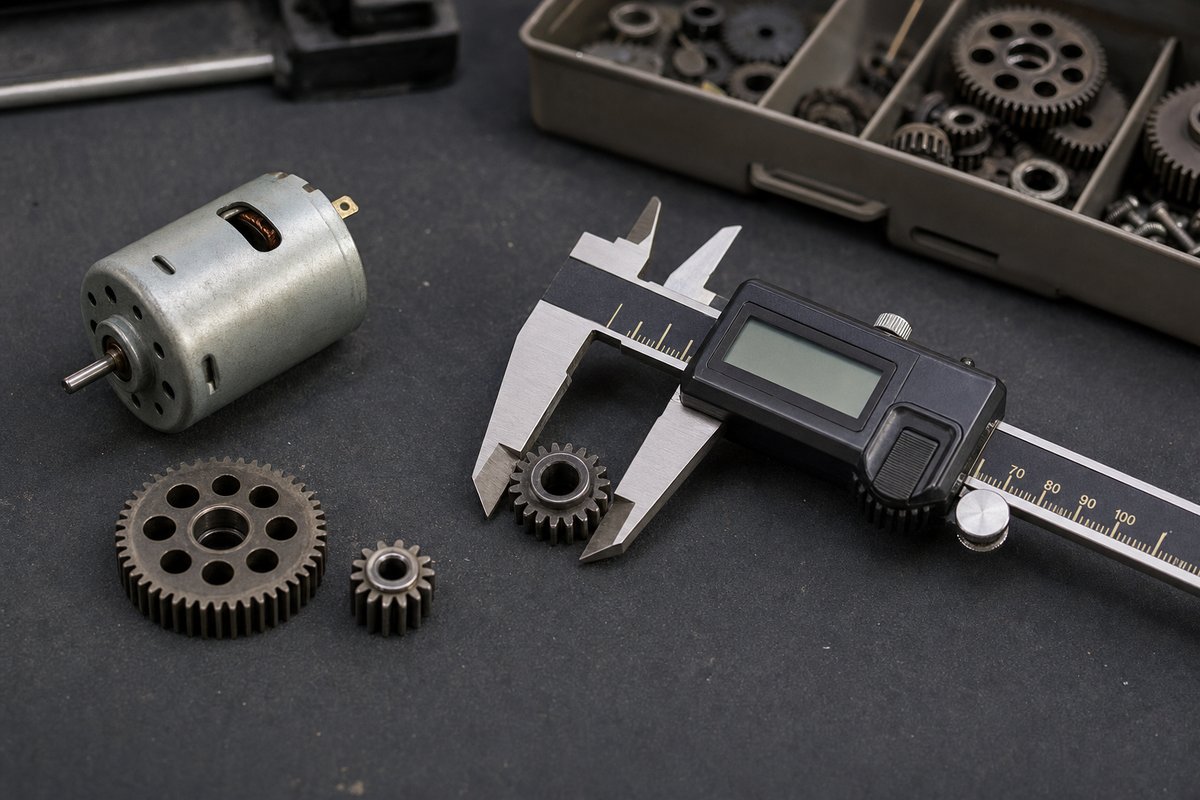
Motor can-size numbers (540, 550, 600) come from a shared industry sizing convention, not a power rating. A high-KV 550 can easily outpull a low-KV 540 of the same nominal size, so size and KV need to be read together, never the size number alone, when matching a motor to a chassis or gearing setup.
Guides in This Section
RC Motor Size Chart: Matching Can Size and KV to Your Vehicle
A reference chart mapping motor can size and KV rating to vehicle scale, gearing and intended use, from crawlers to bashers.
Best RC Cars and Trucks for Driving on Grass
Which chassis types, tire treads and ground clearances hold up on tall grass and uneven lawns without bogging down.
Best Nitro RC Fuel and How to Choose a Percentage
Comparing 16, 20 and 25 percent nitro blends for break-in, everyday running and race-day performance.
How to Build an RC Pulling Tractor from a Stock Chassis
Axle, gearing and weight-transfer changes that turn a standard RC chassis into a sled-pulling tractor build.
Tamiya TT-01 vs TT-02: Chassis Differences and Upgrade Compatibility
Shock tower, gearbox and suspension-geometry differences between the two chassis, and which upgrade parts cross over.
Inrunner vs Outrunner Brushless Motors Explained
Rotor and stator construction differences, and why most RC car and truck motors are built as outrunners.
How to Power an FPV Camera Correctly
Matching voltage to a camera's rated input and wiring it off a filtered power source instead of a raw battery tap.
Frequently Asked Questions
What does the number in an RC motor size, like 540 or 550, actually mean?
It refers to the can dimension in an industry-standard sizing convention used across brushed and brushless motors, not to output power directly. A 550 can is physically larger than a 540, which gives it more room for copper and magnets and generally more torque headroom at the same KV, but the number alone does not tell you how hard a specific motor pulls.
What is KV rating on a brushless motor?
KV is the motor's unloaded RPM per volt applied. A 3300KV motor spins roughly 3300 times faster per volt than a 1000KV motor of the same size, which is why high-KV motors suit bashing and top speed while lower-KV motors of the same can size hold torque better for crawling and towing.
What nitro fuel percentage should a new engine break in on?
Most nitro engines break in on a lower-nitro blend, commonly 16 percent, run rich for the first several tanks before the piston and sleeve seat properly. Jumping straight to a 20-plus percent race fuel before break-in tends to shorten engine life rather than improve it.
Are Tamiya TT-01 and TT-02 chassis parts interchangeable?
Only partially. The TT-02 redesigned the front suspension geometry, gearbox layout and shock mounting from the TT-01, so bulkheads, shock towers and most suspension arms do not swap directly, even though some drivetrain and electronic components carry over.
What size soldering iron is needed for RC motor and battery connectors?
A temperature-controlled iron in the 60 to 80 watt range handles bullet connectors and battery leads reliably. Lower-wattage irons struggle to heat thick gauge wire fast enough, which leads to cold joints, and cold joints are one of the most common causes of intermittent power loss on an RC vehicle.
What is the difference between an inrunner and an outrunner brushless motor?
An inrunner spins its magnets on an internal rotor inside a fixed stator, which favors high RPM and low torque. An outrunner spins the magnet housing around a fixed internal stator, which favors lower RPM and higher torque at a given can size. Most RC car and truck motors are outrunners for that torque advantage.
Does a 2-pole or 4-pole motor spin faster at the same KV?
A 2-pole motor reaches higher RPM at a given KV and voltage because it completes fewer electrical cycles per mechanical revolution, but a 4-pole motor of similar size usually delivers smoother torque and runs cooler under sustained load, which is why 4-pole designs show up more often in trail and crawler applications.
Why does an RC car not respond to the throttle even though the receiver light is on?
A lit receiver light only confirms the receiver has power, not that a valid signal is reaching the ESC. Check the throttle channel plug orientation at the receiver first, then the ESC's failsafe and calibration state, before assuming the transmitter itself has failed.
What heat range should a glow plug be for a nitro engine?
Heat range should match the fuel's nitro percentage and the engine's compression, with colder plugs generally suited to higher-nitro race fuel and hotter plugs to lower-nitro break-in fuel. Running the wrong heat range shows up as hard starting, pinging, or a plug that burns out early.
Can a brushed motor be swapped for a brushless motor in the same chassis?
In most cases yes, provided the pinion, spur gear ratio and can size are compatible and the ESC is a brushless-rated unit rather than a brushed-only controller. The motor mount and gear mesh usually need re-checking, since brushless cans often differ slightly in shaft height and mounting hole spacing from the brushed motor they replace.